Draft System Upgrades for OC Brewery Expansions


Planning Brewery Growth in Orange County Starts With the Right Draft System

Brewery expansion is happening across Orange County, especially in cities like Anaheim, Costa Mesa, Santa Ana, and Irvine. As breweries grow, many owners focus heavily on brewhouse capacity, fermentation space, and packaging upgrades. What often gets overlooked is the draft system.


A draft system that worked for a smaller operation may not perform the same once taprooms expand, new taps are added, or service areas grow. When draft infrastructure falls behind production growth, problems show up quickly. Foam issues increase, pours slow down, and beer quality becomes inconsistent.


Many expanding breweries throughout Orange County turn to Brewskis Beverage Service to evaluate existing systems before making major changes. Early planning allows brewery owners to upgrade infrastructure in a controlled and cost-effective way rather than reacting to problems after expansion is complete.


Signs Your Brewery Has Outgrown Its Draft System

Not every brewery needs a full replacement during expansion, but there are clear indicators that an upgrade is necessary.


Inconsistent Pour Quality During Busy Hours

One of the first signs of an undersized draft system is inconsistent pours during peak service times. A system that performs well during slow hours may struggle once taproom volume increases.


Common symptoms include:

  • Excess foam at the tap
  • Slower pour times
  • Flat beer due to pressure imbalance
  • Increased product waste


These issues are frequently seen in busy brewery districts such as Anaheim and Costa Mesa, where customer traffic increases significantly on weekends.


Limited Capacity for Additional Taps

Many breweries reach a point where adding taps becomes difficult without affecting the existing system. This usually happens when glycol cooling or trunk line capacity reaches its limit.


If you are planning to:

  • Add more tap handles
  • Expand your taproom
  • Introduce outdoor service
  • Increase beer variety


Then your draft system must be evaluated before expansion begins.


Frequent Service and Maintenance Issues

Older systems that are stretched beyond their capacity often require more frequent repairs.


Common warning signs include:

  • Pressure regulators failing more often
  • Uneven temperature readings
  • Glycol systems running continuously
  • Excess moisture or condensation


Addressing these problems early prevents emergency downtime during busy service hours.


Why Draft System Planning Should Happen Before Construction

Many brewery owners plan expansions months in advance, but draft systems are sometimes addressed late in the process. This creates unnecessary complications.


Draft system upgrades should be included during early design phases alongside architectural planning and refrigeration layout.


Early coordination allows for:

  • Efficient line routing
  • Proper equipment sizing
  • Space allocation for future growth
  • Reduced installation delays


Brewery owners across Irvine and Santa Ana often schedule consultations with Brewskis Beverage Service during the planning stage to review system capacity before walls are built and equipment is installed.


Understanding Long Draw Draft Systems for Growing Breweries

As breweries expand, the distance between cold storage and serving locations usually increases. This is where long draw draft systems become essential.


What Is a Long Draw Draft System?

A long draw draft system uses insulated trunk lines and glycol cooling to maintain beer temperature as it travels from the keg room to the tap.


These systems are designed to support:

  • Larger taprooms
  • Multiple serving stations
  • Outdoor bar areas
  • Remote tap towers


Without proper design, long draw systems can lead to temperature swings that impact carbonation levels and overall beer quality.


Scaling Glycol Cooling Systems During Expansion

Glycol cooling is one of the most important components of any large draft system. As more taps are added, cooling demand increases significantly.


Why Glycol Capacity Matters

Every additional tap introduces more heat load into the system. If glycol capacity is insufficient, temperatures rise along the trunk line.


This leads to:

  • Foam-heavy pours
  • Temperature inconsistency
  • Product loss
  • Slower service times


Upgrading glycol capacity during expansion ensures that all taps perform consistently, even during busy service periods.


Planning for Future Expansion

Smart breweries plan glycol capacity beyond immediate needs. This prevents the need for repeated upgrades.


Future considerations may include:

  • Additional tap stations
  • Outdoor service expansion
  • Seasonal demand increases
  • Special event service areas


Planning for growth protects your investment and supports long-term success.


Taproom Expansion Requires Strategic Draft System Design

Taproom growth is one of the most common reasons breweries upgrade their draft systems. More seating, entertainment areas, and extended service hours all increase demand.


Indoor and Outdoor Service Considerations

Outdoor service areas present unique challenges due to exposure to heat and sunlight.


Key planning factors include:

  • Distance from cold storage
  • Environmental exposure
  • Insulation requirements
  • Temperature control stability


Breweries located near coastal areas of Orange County often require stronger insulation and consistent glycol circulation to maintain quality in outdoor service areas.


Material Selection Impacts Performance and Maintenance

Choosing the right materials during expansion reduces long-term maintenance issues and improves beer quality.


Modern Barrier Tubing and Stainless Options

Older vinyl lines are gradually being replaced by modern barrier tubing that resists flavor carryover and contamination.


Advantages include:

  • Improved sanitation
  • Reduced flavor transfer
  • Longer lifespan
  • Easier maintenance


Using higher-quality materials during system upgrades reduces long-term service costs and supports better tasting beer.


Managing Multiple Beer Styles During Expansion

As breweries grow, the variety of beers offered often increases. Each beer style requires different pressure and carbonation settings.


Balancing Multiple Beer Styles

Different beers require different serving conditions.


Examples include:

  • Highly carbonated lagers
  • Nitrogen-based stouts
  • Hazy IPAs
  • Seasonal specialty beers


Proper balancing ensures that each line performs independently without affecting others.

This is especially important for breweries expanding into larger tasting rooms with diverse tap lists.


Unique Challenges for Breweries in Orange County

Operating in Orange County presents environmental and operational challenges that affect draft system performance.


High Customer Traffic

Busy brewery areas experience heavy usage during evenings and weekends.


High demand places stress on:

  • Glycol systems
  • Pressure regulators
  • Line balancing
  • Cooling equipment


Systems must be designed to perform reliably during peak demand periods.


Warm Climate Conditions

Southern California temperatures create ongoing cooling challenges.


Warm conditions increase the risk of:

  • Foam issues
  • Temperature instability
  • Equipment strain


Strong insulation and properly sized cooling systems are essential for reliable performance.


Preventative Maintenance After System Upgrades

Upgrading your draft system is only the beginning. Regular maintenance ensures long-term performance.


Recommended practices include:

  • Scheduled line cleaning
  • Pressure inspections
  • Glycol level monitoring
  • Equipment calibration


Breweries that follow consistent maintenance routines experience fewer emergency repairs and improved beer quality.


Many Orange County breweries rely on Brewskis Beverage Service for ongoing preventative maintenance programs that help maintain system performance year-round.


Budgeting for Draft System Upgrades

Draft infrastructure should be included in expansion budgets from the beginning.


Common cost considerations include:

  • Equipment upgrades
  • Installation labor
  • Cooling expansion
  • Materials and insulation
  • Future growth allowances


Investing in proper infrastructure upfront prevents repeated expenses later.


Working With Experienced Draft System Professionals

Draft system upgrades require technical expertise and careful planning. Choosing the right service partner can make the expansion process smoother.


Reliable providers should offer:

  • Custom system design
  • Installation services
  • System troubleshooting
  • Maintenance programs
  • Expansion planning support


Breweries throughout Anaheim, Irvine, and Costa Mesa frequently partner with Brewskis Beverage Service for system upgrades and new installations because of their experience working with growing brewery operations across Southern California.


Supporting Multi-Location Brewery Growth

Some breweries expand into multiple locations once their brand gains traction. Standardizing draft systems across locations improves operational efficiency.


Benefits of standardized systems include:

  • Faster troubleshooting
  • Consistent beer quality
  • Simplified staff training
  • Easier equipment replacement


Consistency across locations strengthens brand identity and customer experience.


Preparing for Technology Integration

Modern draft systems are becoming more advanced. Many breweries are adopting monitoring technology that tracks system performance.


These tools allow operators to monitor:

  • Temperature stability
  • Pressure levels
  • Glycol performance
  • Maintenance schedules


Early detection of issues prevents service disruptions and protects product quality.


Why Draft System Upgrades Protect Your Beer Quality

Beer quality does not end at the brewing process. The draft system plays a major role in maintaining taste, carbonation, and consistency.


Proper upgrades support:

  • Stable serving temperatures
  • Balanced carbonation
  • Smooth pour performance
  • Reduced waste


Serving beer exactly as intended protects your reputation and keeps customers coming back.


When to Schedule a Draft System Evaluation

Waiting until problems appear often leads to costly repairs. Scheduling evaluations early helps prevent downtime.


Consider scheduling an evaluation when:

  • Planning an expansion
  • Increasing tap count
  • Opening new service areas
  • Experiencing frequent foam issues
  • Preparing for seasonal demand increases


Proactive planning keeps operations running smoothly.


Schedule a Draft System Upgrade Consultation With Brewskis Beverage Service

If your brewery is expanding in Orange County or preparing to increase tap capacity, professional draft system support can make the process smoother and more reliable.


Brewskis Beverage Service provides draft system evaluations, upgrades, and long draw installations designed to support brewery growth across Anaheim, Santa Ana, Costa Mesa, Irvine, and surrounding areas.


Working with a knowledgeable draft system team helps breweries:

  • Expand tap capacity with confidence
  • Maintain consistent pour quality
  • Reduce product waste
  • Support long-term growth


Planning your draft system upgrades early ensures that your expansion stays on schedule and your beer continues to pour exactly as intended.

GIVE US A CALL TODAY
Brewskis Beverage Service

AUTHOR:

Brewskis Beverage Service

Brewskis Beverage is a draft beer service company that specializes in draft system repair, installation, and custom beer tower design.

LEAVE A COMMENT:

Need Help with Draft Beer System Repair & Installation?

If you're in need of a draft beer system, be sure to check out Brewskis Beverage. We offer a wide selection of direct-draw beer systems that are perfect for any business. We also offer repair and installation services, so you can be sure your system is always up and running. Contact us today to learn more!

Blog - Request a Quote

Search Post:

RECENT POST:
September 5, 2026
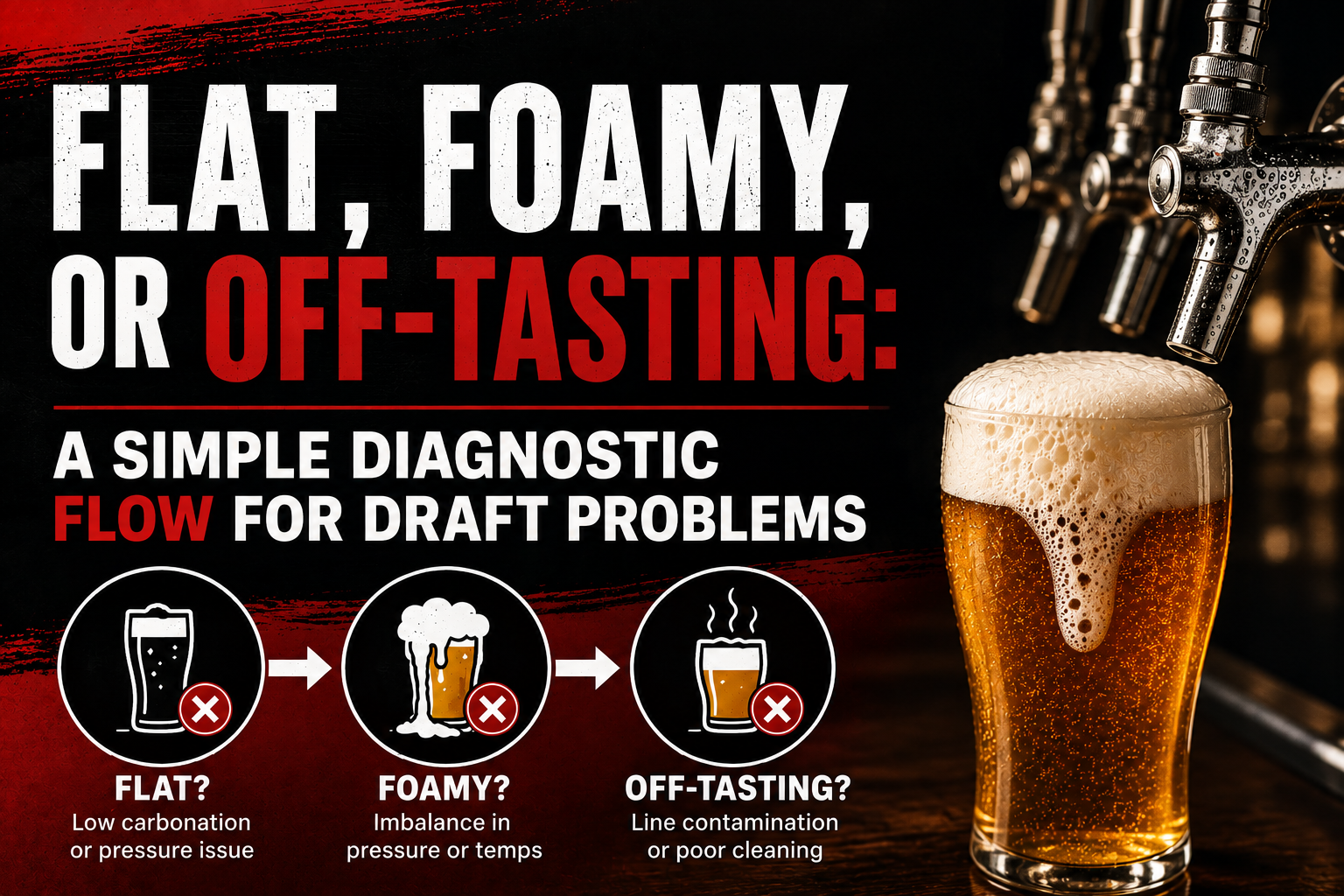
When a draft pour is not right, the problem is usually one of three things: the beer pours flat, it pours too foamy, or it tastes off. Each symptom points to a specific set of causes. By following a simple diagnostic flow, bars and restaurants can find the root issue faster, reduce waste, and get back to clean, consistent pours. This guide walks you through a step-by-step way to troubleshoot common draft problems. Use it as a checklist for your team or as a starting point before calling in professional service. Start with the basics Before diving into complex fixes, check the fundamentals. Many draft issues come from simple oversights that are easy to correct. Quick basics to verify: Is the keg cold enough from top to bottom? Is the CO2 tank open and connected properly? Is the regulator set to the correct pressure for the beer and system? Are the faucet and coupler clean and free of debris? Has the system been cleaned within the recommended interval? If any of these are off, correct them first and test a pour. If the beer pours flat Flat beer usually means the beer is losing carbonation somewhere between the keg and the glass. This can happen due to low pressure, temperature issues, or leaks. Check these in order: CO2 pressure: Verify the regulator is set correctly for your system and beer style. Too low pressure can cause flat pours. Temperature: Warm beer holds less carbonation. Ensure the keg and lines are at the proper serving temperature. Leaks: Inspect all connections, including the coupler, regulator, and line fittings. Use soapy water to look for bubbles that indicate a leak. Line length and balance: If lines are too long or the system is unbalanced, carbonation can drop before the beer reaches the faucet. Keg age: Old or improperly stored kegs can lose carbonation over time. If pressure, temperature, and connections are correct but the beer is still flat, the system may need rebalancing or professional inspection. If the beer pours too foamy Excessive foam is one of the most common draft complaints. It is often caused by temperature, pressure, or restriction issues that agitate the beer as it flows. Check these in order: Temperature: Beer that is too warm will foam excessively. Ensure the keg and lines are properly chilled. Pressure: Too much CO2 pressure can cause over-carbonation and foam. Verify the regulator setting matches your system design. Restrictions: Kinks in the line, clogged faucets, or dirty couplers can create turbulence and foam. Inspect and clean as needed. System balance: If line length, diameter, and pressure are not balanced, foam is likely. This often requires a professional assessment. Pour technique: Tilting the glass and opening the faucet fully can reduce foam. Train staff on proper pour method. If foam persists after these checks, the issue may be deeper in the system, such as glycol problems in long-draw setups or hidden restrictions. If the beer tastes off Off-flavors are often the most serious sign. They can indicate contamination, dirty lines, or equipment issues that affect both taste and safety. Check these in order: Line cleanliness: Dirty beer lines are the most common cause of sour, stale, or off-tasting beer. Verify the last cleaning date and schedule a clean if overdue. Faucet and coupler hygiene: Buildup in these areas can taint flavor. Remove and clean both components thoroughly. Old beer in lines: If a tap has not been used in a while, flush it before serving. Stale beer left in lines can spoil the taste. Chemical residue: If lines were recently cleaned, ensure they were rinsed properly. Residual cleaner can create chemical or soapy flavors. Equipment wear: Worn seals, gaskets, or plastic parts can harbor bacteria and affect taste. Replace parts as needed. If off-flavors continue after cleaning and flushing, the system may need a deep clean, acid wash, or professional service to check for biofilm or hidden contamination. Use a simple diagnostic flow To make troubleshooting faster, follow this order: Check temperature first. Most draft problems start with improper cooling. Verify CO2 pressure and connections. Incorrect pressure or leaks cause flat or foamy pours. Inspect faucets, couplers, and lines for dirt, debris, or damage. Confirm the system was cleaned on schedule and rinsed properly. Test pour technique and glassware. Staff training can solve many foam issues. If problems persist, call a professional to assess system balance, glycol function, or hidden issues. This flow helps you eliminate the most common causes before moving to complex fixes. When to call a professional Some draft problems require specialized knowledge or equipment. If basic checks do not resolve the issue, it is time to bring in expert service. Call a professional if: Off-flavors persist after thorough cleaning and flushing. Foam or flat pours continue despite correct temperature and pressure. You suspect system imbalance or glycol issues in long-draw setups. There are visible leaks you cannot locate or fix. The system has not been serviced in a long time. Professional service can identify hidden problems, rebalance the system, and perform deep cleaning that restores pour quality. Prevent problems with routine care The best way to avoid draft issues is consistent maintenance. A well-maintained system pours better, wastes less beer, and keeps customers happy. Routine care should include: Cleaning beer lines every 14 days at minimum. Cleaning faucets and couplers on the same schedule. Checking temperature and pressure regularly. Inspecting lines and fittings for wear or damage. Keeping a log of cleaning and service dates. When maintenance is routine, small issues are caught before they become big problems. Flat, foamy, or off-tasting beer does not have to mean lost revenue or unhappy customers. By following a simple diagnostic flow, you can identify and fix most draft problems quickly. Start with temperature and pressure, move to cleaning and inspection, and call in professional service when needed. Consistent care and a clear troubleshooting process keep your draft system pouring at its best. At Brewskis, we help bars and restaurants diagnose and resolve draft issues fast. From cleaning and balancing to full system service, our team ensures every pour meets quality standards.
August 28, 2026
A great draft pour should taste clean, fresh, and true to the brewery’s intent. When beer tastes sour, stale, flat, or oddly foamy, it is rarely the beer’s fault. Most of the time, the problem lives in the draft system itself. For bars, restaurants, and venues that serve draft beer, off-flavors and poor pours are more than a minor annoyance. They damage customer trust, increase waste, and can quietly hurt your reputation. The good news is that most draft quality issues are preventable with the right maintenance and professional support. Common causes of off-tasting draft beer Draft beer is sensitive. It travels through lines, faucets, couplers, and regulators before it reaches the glass. If any part of that system is dirty, unbalanced, or poorly maintained, the beer can pick up unwanted flavors or lose carbonation. Some of the most common causes include: Dirty beer lines: Residue, yeast, and protein buildup can create sour, stale, or “off” flavors. Old or contaminated faucets and couplers: Buildup in these areas can affect taste and flow. Improper temperature: Beer that is too warm can foam excessively and taste flat; beer that is too cold can mute flavor. Incorrect gas pressure: Too much pressure creates foam; too little pressure makes beer pour slowly and lose carbonation. Unbalanced system: Line length, diameter, and pressure must work together. If they do not, pours suffer. Leaks or worn parts: Small leaks or worn components can cause oxidation, flat beer, or inconsistent pours. When these issues stack up, the beer in the glass no longer matches what the brewery intended. What off-flavors usually mean Different taste problems often point to different system issues. Sour or stale taste: Often caused by dirty lines, old beer residue, or contaminated faucets. Flat or under-carbonated beer: Can result from low gas pressure, leaks, or temperature issues. Over-foaming pours: Usually tied to high pressure, warm lines, or imbalance in the system. Metallic or chemical taste: May indicate equipment issues or improper cleaning. Inconsistent pours from tap to tap: Often a sign of uneven pressure, line problems, or maintenance gaps. Identifying the pattern helps narrow down the root cause. Why cleaning matters Beer line cleaning is one of the most important steps in maintaining draft quality. The Brewers Association and industry best practices recommend cleaning draught systems at least every 14 days, with additional attention to faucets and couplers. Cleaning helps remove: Yeast and protein buildup. Mineral deposits. Mold or bacteria. Old beer residue. When lines are clean, beer flows through without picking up unwanted flavors. That means the pour tastes fresher, cleaner, and more consistent. Temperature and pressure: the quiet quality killers Even with clean lines, draft beer can taste wrong if temperature or pressure is off. Temperature: Beer should be kept at the correct temperature from keg to faucet. Warm lines cause foaming; overly cold beer can taste muted. Pressure: Gas pressure must match the system design. Too high creates foam; too low causes flat, slow pours. Balance: Line length, diameter, and pressure must work together. An unbalanced system will struggle no matter how clean the lines are. These factors are technical, but they directly affect what the customer experiences. How professional service fixes the problem Draft systems may look simple, but they require technical knowledge to maintain correctly. Professional service helps identify and resolve issues that routine cleaning alone may not fix. A professional draft service visit may include: Full line cleaning and sanitation. Faucet and coupler inspection and cleaning. Pressure and temperature verification. System balancing checks. Leak detection and hardware inspection. Recommendations for ongoing maintenance schedules. This kind of service prevents small issues from becoming costly problems. It also protects the quality of every pour. The cost of ignoring draft quality Poor draft quality does more than ruin a single beer. It affects the entire customer experience. Potential costs include: Wasted product from foaming and bad pours. Lost repeat business from dissatisfied customers. Increased service calls and emergency repairs. Damage to brand reputation. Preventive maintenance is almost always less expensive than fixing a neglected system. Signs your draft system needs attention If you notice any of the following, it may be time to call a professional: Beer tastes sour, stale, or “off.” Pours are consistently foamy or flat. Some taps pour differently than others. You see visible buildup in faucets or lines. Customers complain about beer quality. You are unsure when the system was last serviced. Early action can prevent bigger problems down the line. Why consistency matters Customers expect their draft beer to taste right every time. Consistency builds trust. When a guest knows they can count on a quality pour, they are more likely to return. Professional maintenance helps ensure: Better flavor. Better presentation. Better customer experiences. Better overall consistency. That consistency supports your brand and keeps guests coming back. Closing thought If your draft beer tastes off, the problem is usually fixable. Most issues come from dirty lines, unbalanced systems, or temperature and pressure problems, all of which professional service can address. For businesses that care about quality, regular maintenance is not optional. It is essential. At Brewskis , we know that a great draft experience starts with a well-maintained system. Keeping your equipment clean, balanced, and properly serviced helps every pour deliver the quality your customers expect.
August 21, 2026
A great draft pour should taste clean, fresh, and true to the brewery’s intent. When beer tastes sour, stale, flat, or oddly foamy, it is rarely the beer’s fault. Most of the time, the problem lives in the draft system itself. For bars, restaurants, and venues that serve draft beer, off-flavors and poor pours are more than a minor annoyance. They damage customer trust, increase waste, and can quietly hurt your reputation. The good news is that most draft quality issues are preventable with the right maintenance and professional support. Common causes of off-tasting draft beer Draft beer is sensitive. It travels through lines, faucets, couplers, and regulators before it reaches the glass. If any part of that system is dirty, unbalanced, or poorly maintained, the beer can pick up unwanted flavors or lose carbonation. Some of the most common causes include: Dirty beer lines: Residue, yeast, and protein buildup can create sour, stale, or “off” flavors. Old or contaminated faucets and couplers: Buildup in these areas can affect taste and flow. Improper temperature: Beer that is too warm can foam excessively and taste flat; beer that is too cold can mute flavor. Incorrect gas pressure: Too much pressure creates foam; too little pressure makes beer pour slowly and lose carbonation. Unbalanced system: Line length, diameter, and pressure must work together. If they do not, pours suffer. Leaks or worn parts: Small leaks or worn components can cause oxidation, flat beer, or inconsistent pours. When these issues stack up, the beer in the glass no longer matches what the brewery intended. What off-flavors usually mean Different taste problems often point to different system issues. Sour or stale taste: Often caused by dirty lines, old beer residue, or contaminated faucets. Flat or under-carbonated beer: Can result from low gas pressure, leaks, or temperature issues. Over-foaming pours: Usually tied to high pressure, warm lines, or imbalance in the system. Metallic or chemical taste: May indicate equipment issues or improper cleaning. Inconsistent pours from tap to tap: Often a sign of uneven pressure, line problems, or maintenance gaps. Identifying the pattern helps narrow down the root cause. Why cleaning matters Beer line cleaning is one of the most important steps in maintaining draft quality. The Brewers Association and industry best practices recommend cleaning draught systems at least every 14 days, with additional attention to faucets and couplers. Cleaning helps remove: Yeast and protein buildup. Mineral deposits. Mold or bacteria. Old beer residue. When lines are clean, beer flows through without picking up unwanted flavors. That means the pour tastes fresher, cleaner, and more consistent. Temperature and pressure: the quiet quality killers Even with clean lines, draft beer can taste wrong if temperature or pressure is off. Temperature: Beer should be kept at the correct temperature from keg to faucet. Warm lines cause foaming; overly cold beer can taste muted. Pressure: Gas pressure must match the system design. Too high creates foam; too low causes flat, slow pours. Balance: Line length, diameter, and pressure must work together. An unbalanced system will struggle no matter how clean the lines are. These factors are technical, but they directly affect what the customer experiences. How professional service fixes the problem Draft systems may look simple, but they require technical knowledge to maintain correctly. Professional service helps identify and resolve issues that routine cleaning alone may not fix. A professional draft service visit may include: Full line cleaning and sanitation. Faucet and coupler inspection and cleaning. Pressure and temperature verification. System balancing checks. Leak detection and hardware inspection. Recommendations for ongoing maintenance schedules. This kind of service prevents small issues from becoming costly problems. It also protects the quality of every pour. The cost of ignoring draft quality Poor draft quality does more than ruin a single beer. It affects the entire customer experience. Potential costs include: Wasted product from foaming and bad pours. Lost repeat business from dissatisfied customers. Increased service calls and emergency repairs. Damage to brand reputation. Preventive maintenance is almost always less expensive than fixing a neglected system. Signs your draft system needs attention If you notice any of the following, it may be time to call a professional: Beer tastes sour, stale, or “off.” Pours are consistently foamy or flat. Some taps pour differently than others. You see visible buildup in faucets or lines. Customers complain about beer quality. You are unsure when the system was last serviced. Early action can prevent bigger problems down the line. Why consistency matters Customers expect their draft beer to taste right every time. Consistency builds trust. When a guest knows they can count on a quality pour, they are more likely to return. Professional maintenance helps ensure: Better flavor. Better presentation. Better customer experiences. Better overall consistency. That consistency supports your brand and keeps guests coming back. Closing thought If your draft beer tastes off, the problem is usually fixable. Most issues come from dirty lines, unbalanced systems, or temperature and pressure problems, all of which professional service can address. For businesses that care about quality, regular maintenance is not optional. It is essential. At Brewskis , we know that a great draft experience starts with a well-maintained system. Keeping your equipment clean, balanced, and properly serviced helps every pour deliver the quality your customers expect.
August 14, 2026
A great draft pour does not happen by accident. Behind every clean, consistent, good-tasting beer is a draft system that has been properly maintained, cleaned, and balanced. When that system is neglected, the beer can lose freshness, the pour can become inconsistent, and the whole customer experience can suffer. For bars, restaurants, and other draft beer businesses, routine maintenance is not just a technical task. It is a direct part of product quality, customer satisfaction, and profitability. A well-maintained system helps every pour taste the way it should. Why maintenance matters Draft beer systems are complex. Beer lines, faucets, couplers, regulators, and cooler components all work together to move beer from keg to glass. If one part falls out of balance, the quality of the pour can drop quickly. Regular maintenance helps: Preserve beer freshness. Prevent contamination. Reduce foaming and waste. Keep pours consistent. Extend the life of equipment. When draft systems are ignored, small issues can turn into bigger problems fast. What starts as a slightly off-tasting pint or a foamy pour can become lost product, unhappy customers, and expensive repairs. What happens when maintenance is skipped Dirty or poorly maintained draft systems can cause a range of problems. Beer lines may collect residue, faucets may clog, and buildup can affect both flavor and flow. Customers may notice off flavors, weak carbonation, or a pour that looks wrong before they can even take a sip. Common problems include: Sour or stale taste. Excessive foam. Flat beer. Slow or uneven pours. Inconsistent pressure. Equipment wear and breakdowns. These problems do more than hurt the beer. They hurt the business. A poor draft pour can make a guest question the quality of the entire establishment. Clean lines make better beer One of the biggest reasons to schedule routine maintenance is simple: clean lines make better beer. Beer line buildup can affect flavor and create the kind of stale, unpleasant taste that no brewery intended. Cleaning helps remove: Yeast and protein residue. Mineral buildup. Mold or bacteria. Old beer deposits. When lines are clean, the beer travels through the system without picking up unwanted flavors. That means the beer in the glass tastes fresher, cleaner, and more consistent. Better pours save money Routine maintenance is also a business decision. A draft system that is not working properly can waste a lot of beer through foaming, leaking, or bad pours. That lost product adds up quickly. A well-maintained system can help: Reduce waste. Improve yield from each keg. Prevent unnecessary service calls. Lower repair costs over time. Protect profit margins. Even small improvements in efficiency can make a real difference, especially in high-volume environments. Maintenance may feel like an expense, but it often saves money in the long run. Consistency keeps customers happy When customers order a draft beer, they expect it to look and taste right every time. Consistency matters. If one pour is perfect and the next is flat or foamy, guests notice. Routine maintenance helps keep: Carbonation levels stable. Temperature controlled. Pressure properly balanced. Beer flowing at the right speed. That consistency builds trust. Guests are more likely to come back when they know they can count on a quality pour every time. What regular maintenance includes Routine draft beer maintenance can involve several steps depending on the system and setting. In general, it should include cleaning, inspection, and adjustment as needed. A maintenance visit may include: Cleaning beer lines. Checking faucets and couplers. Inspecting tubing and connections. Reviewing gas pressure and balance. Testing for leaks or wear. Evaluating temperature and system performance. These steps help catch problems before they become major issues. Preventive care is almost always easier and less costly than emergency repair. How often should maintenance happen? The right schedule depends on system use, beer type, and equipment setup, but regular service should always be part of the plan. High-volume systems may need more frequent attention, while lower-volume systems still need consistent cleaning and inspection. The important thing is not to wait until something goes wrong. A proactive schedule helps keep the system working properly and protects beer quality every day. Businesses that treat maintenance as routine tend to avoid more serious issues later on. Why professional service matters Draft beer systems may look simple from the outside, but they require technical knowledge to maintain correctly. Pressure, temperature, line length, and cleaning methods all affect how the beer pours. Professional maintenance helps ensure: Proper cleaning techniques. Correct system balancing. Early identification of problems. Safer, more reliable equipment performance. For businesses that depend on draft beer, professional service provides peace of mind. It helps protect both the product and the customer experience. A clean system supports your brand Every pour says something about your business. A beer that tastes fresh and pours smoothly sends the message that you care about quality. A poor pour sends the opposite message. Routine maintenance supports your brand by helping you deliver: Better flavor. Better presentation. Better customer experiences. Better overall consistency. When guests remember the quality of the beer, they are more likely to remember the business positively too. Routine draft beer system maintenance is one of the simplest ways to protect beer quality, reduce waste, and keep customers happy. Clean lines, balanced equipment, and regular service all work together to create a better pour every time. For businesses that care about consistency and performance, maintenance is not optional, it is essential. At Brewskis, we know that a great draft system is the foundation of a great beer experience. Keeping it in top shape helps every pour live up to its potential.
August 7, 2026
A great draft beer experience starts long before the first pour. Proper tap installation plays a major role in how beer tastes, how it flows, and how consistently it reaches the glass. When a tap system is installed the right way, it helps preserve quality from keg to pour and creates a better experience for both businesses and customers. For bars, restaurants, and draft beer operations, tap installation is not just about convenience. It affects performance, efficiency, and the overall quality of the beer being served. A well-installed system supports everything that comes after it. Why installation matters Draft beer systems depend on balance. Pressure, temperature, line length, faucet placement, and equipment compatibility all affect the final result. If the installation is not done correctly, the system may struggle from the start. A proper tap installation helps: Maintain beer freshness. Deliver a smooth, consistent pour. Reduce foaming. Protect carbonation. Prevent leaks and equipment issues. When any part of the system is installed incorrectly, the quality of the beer can suffer. Even high-quality beer will not pour well if the tap setup is flawed. How installation affects beer quality Beer is sensitive to changes in temperature and pressure. That means the tap system has to be set up with precision. If the lines are too short, too long, poorly insulated, or not balanced correctly, the beer can lose carbonation or pour with too much foam. Poor installation can lead to: Flat beer. Over-carbonation or under-carbonation issues. Excess foam. Off flavors. Uneven dispensing. A proper installation helps make sure the beer stays in the condition it was meant to be served in. That is essential for both taste and presentation. A good pour starts with the right setup When tap equipment is installed correctly, the system works more efficiently. The beer flows smoothly, the pressure stays stable, and the pour feels clean and controlled. That consistency matters because guests notice the difference right away. A good tap setup supports: Faster service. Better-looking pours. Less waste. More reliable performance. Easier day-to-day operation. For businesses, that means less frustration behind the bar and a better experience for customers at the table. Installation mistakes can be costly If a draft system is installed poorly, the problems may not show up right away. But over time, they can become expensive. Leaks, foaming, wasted product, and frequent service calls all add up. Common installation problems include: Incorrect pressure settings. Poor line routing. Inadequate temperature control. Loose fittings or connections. Incorrect faucet or shank placement. These issues can lead to ongoing maintenance headaches and reduced beer quality. That is why professional installation is so important from the beginning. Proper installation helps protect your investment Draft beer equipment is an investment, and installation is the foundation that protects it. When the system is installed correctly, the equipment is more likely to perform well and last longer. This can help: Extend the life of taps and lines. Reduce repair needs. Lower operating costs. Improve product efficiency. Protect your beer inventory. A good installation pays off over time by reducing avoidable problems. It gives the system a strong start and helps businesses get the most value from their equipment. The customer notices the difference Most customers may not think about the tap system itself, but they absolutely notice the result. A beer that pours cleanly, tastes fresh, and arrives looking right creates a better impression. That means proper installation affects more than equipment performance. It affects: Customer satisfaction. Repeat business. Brand reputation. Perceived quality. A smooth draft pour can become part of what people remember about your business. That makes installation an important part of the customer experience, not just the back-end setup. Why professional installation is worth it Draft beer systems may seem straightforward, but they require technical knowledge to install correctly. Professional installation helps ensure that the system is balanced, efficient, and tailored to the specific setup. Professional service can help with: System design and planning. Correct equipment placement. Pressure and temperature setup. Leak prevention. Long-term reliability. When the installation is done by experienced technicians, businesses can feel more confident that the system will perform the way it should from the beginning. Installation and maintenance go hand in hand Even the best tap installation still needs routine care. Installation creates the foundation, and maintenance keeps the system performing well over time. When both are handled properly, beer quality stays consistent and problems are easier to avoid. That is why many businesses think of installation and maintenance as part of the same long-term strategy. One supports the other, and together they help protect the quality of every pour. Proper tap installation matters because it shapes everything that comes after it. From freshness and carbonation to pour quality and customer satisfaction, the system has to be installed correctly to do its job well. For any business serving draft beer, that attention to detail is worth it. At Brewskis, we understand that the best beer experience starts with the right setup. A properly installed tap system helps every pour deliver the quality customers expect.
July 31, 2026
A great beer night is about more than just pouring drinks. It is about creating a relaxed atmosphere where good conversation, great flavors, and easygoing fun all come together. With a little planning, you can turn an ordinary evening into a memorable gathering that feels effortless for your guests. The best part is that hosting a beer night does not need to be complicated. A few thoughtful choices around beer selection, food, setup, and pacing can make the whole experience feel polished without losing the laid-back vibe. Start with the right beer selection A strong beer night begins with variety. You do not need a huge menu, but offering a few different styles gives your guests options and makes the evening more interactive. A simple lineup might include: A light lager or pilsner for easy drinking. An IPA for guests who like bolder flavors. An amber ale or brown ale for something balanced and smooth. A stout or porter if you want a darker, richer option. If you want to keep things simple, choose three beers with clearly different flavor profiles. That way, guests can compare and discover what they like without feeling overwhelmed. Make the food match the mood Food helps turn beer from a drink into an experience. It keeps the night comfortable, gives guests something to enjoy between pours, and helps balance stronger beers. Good beer-night foods include: Pretzels and dips. Sliders or mini burgers. Wings. Nachos. Pizza. Cheese boards. Chips, nuts, and snack mixes. Try to include a mix of salty, savory, and mildly rich foods. That gives you flexibility across different beer styles and keeps the menu easy to manage. Set up a relaxed space The right atmosphere matters just as much as the beer itself. Your goal is to make people feel welcome and unhurried. A few simple setup tips: Use good glassware if you have it, but do not stress if you do not. Keep bottles or cans chilled and easy to reach. Provide water so guests can pace themselves comfortably. Make sure there is enough seating for conversation. Use warm lighting or soft music to keep the space relaxed. A beer night should feel social, not formal. The more comfortable the setting, the more fun the evening will be. Keep the conversation flowing A great host helps the night feel easy. You do not need a formal tasting agenda, but a few conversation starters can keep things lively. You could ask: Which beer is the favorite so far? What food pairing works best with this style? Do guests usually prefer light, hoppy, or dark beers? What beer style surprised them most? These simple questions help guests interact and make the evening feel more engaging. If people are trying new beers, a little conversation around flavor and preference can make the experience more memorable. Plan the pacing One of the easiest ways to improve the night is to think about pacing. Beer nights are more enjoyable when guests have time to enjoy each pour and each conversation. A good pacing plan might include: Starting with lighter beers. Moving to more flavorful or heavier styles later. Serving food early and replenishing snacks as needed. Offering water throughout the night. This helps prevent the evening from feeling rushed and gives everyone time to appreciate what they are drinking. It also keeps the gathering comfortable and balanced. Add a small tasting element If you want to make the night feel a little more special, you can turn it into a casual tasting. That does not mean making it serious or complicated. It just means giving people a chance to notice what they like. Try asking guests to think about: Color. Aroma. First taste. Aftertaste. What food pairs best with each beer. You could even provide small note cards or just keep it conversational. The idea is to make the night more interactive without losing the relaxed feel. Keep it inclusive Not everyone drinks the same amount, and not everyone wants to focus only on beer. A good host makes sure everyone feels included. You can do this by offering: Non-alcoholic drinks. Water and sparkling water. Food options for different preferences. A low-pressure environment where guests can enjoy the evening their own way. The best beer nights are the ones where people feel comfortable, welcome, and free to enjoy themselves without pressure. A few hosting mistakes to avoid Even a simple gathering can go smoothly if you avoid a few common mistakes. Try not to: Overcomplicate the menu. Serve only strong beers with no lighter option. Forget water. Make the event feel too formal. Run out of snacks too early. Beer nights are best when they feel easy, balanced, and well thought out. A little preparation goes a long way. The perfect beer night does not require a big budget or a complicated plan. It just takes a few good beers, the right snacks, a comfortable space, and friends who are ready to relax. When you keep the focus on good company and easy enjoyment, the night naturally takes care of itself. At Brewskis, we believe beer is best when it brings people together. A great beer night is really about creating a moment people want to repeat.
July 24, 2026
A great beer night is about more than just pouring drinks. It is about creating a relaxed atmosphere where good conversation, great flavors, and easygoing fun all come together. With a little planning, you can turn an ordinary evening into a memorable gathering that feels effortless for your guests. The best part is that hosting a beer night does not need to be complicated. A few thoughtful choices around beer selection, food, setup, and pacing can make the whole experience feel polished without losing the laid-back vibe. Start with the right beer selection A strong beer night begins with variety. You do not need a huge menu, but offering a few different styles gives your guests options and makes the evening more interactive. A simple lineup might include: A light lager or pilsner for easy drinking. An IPA for guests who like bolder flavors. An amber ale or brown ale for something balanced and smooth. A stout or porter if you want a darker, richer option. If you want to keep things simple, choose three beers with clearly different flavor profiles. That way, guests can compare and discover what they like without feeling overwhelmed. Make the food match the mood Food helps turn beer from a drink into an experience. It keeps the night comfortable, gives guests something to enjoy between pours, and helps balance stronger beers. Good beer-night foods include: Pretzels and dips. Sliders or mini burgers. Wings. Nachos. Pizza. Cheese boards. Chips, nuts, and snack mixes. Try to include a mix of salty, savory, and mildly rich foods. That gives you flexibility across different beer styles and keeps the menu easy to manage. Set up a relaxed space The right atmosphere matters just as much as the beer itself. Your goal is to make people feel welcome and unhurried. A few simple setup tips: Use good glassware if you have it, but do not stress if you do not. Keep bottles or cans chilled and easy to reach. Provide water so guests can pace themselves comfortably. Make sure there is enough seating for conversation. Use warm lighting or soft music to keep the space relaxed. A beer night should feel social, not formal. The more comfortable the setting, the more fun the evening will be. Keep the conversation flowing A great host helps the night feel easy. You do not need a formal tasting agenda, but a few conversation starters can keep things lively. You could ask: Which beer is the favorite so far? What food pairing works best with this style? Do guests usually prefer light, hoppy, or dark beers? What beer style surprised them most? These simple questions help guests interact and make the evening feel more engaging. If people are trying new beers, a little conversation around flavor and preference can make the experience more memorable. Plan the pacing One of the easiest ways to improve the night is to think about pacing. Beer nights are more enjoyable when guests have time to enjoy each pour and each conversation. A good pacing plan might include: Starting with lighter beers. Moving to more flavorful or heavier styles later. Serving food early and replenishing snacks as needed. Offering water throughout the night. This helps prevent the evening from feeling rushed and gives everyone time to appreciate what they are drinking. It also keeps the gathering comfortable and balanced. Add a small tasting element If you want to make the night feel a little more special, you can turn it into a casual tasting. That does not mean making it serious or complicated. It just means giving people a chance to notice what they like. Try asking guests to think about: Color. Aroma. First taste. Aftertaste. What food pairs best with each beer. You could even provide small note cards or just keep it conversational. The idea is to make the night more interactive without losing the relaxed feel. Keep it inclusive Not everyone drinks the same amount, and not everyone wants to focus only on beer. A good host makes sure everyone feels included. You can do this by offering: Non-alcoholic drinks. Water and sparkling water. Food options for different preferences. A low-pressure environment where guests can enjoy the evening their own way. The best beer nights are the ones where people feel comfortable, welcome, and free to enjoy themselves without pressure. A few hosting mistakes to avoid Even a simple gathering can go smoothly if you avoid a few common mistakes. Try not to: Overcomplicate the menu. Serve only strong beers with no lighter option. Forget water. Make the event feel too formal. Run out of snacks too early. Beer nights are best when they feel easy, balanced, and well thought out. A little preparation goes a long way. The perfect beer night does not require a big budget or a complicated plan. It just takes a few good beers, the right snacks, a comfortable space, and friends who are ready to relax. When you keep the focus on good company and easy enjoyment, the night naturally takes care of itself. At Brewskis, we believe beer is best when it brings people together. A great beer night is really about creating a moment people want to repeat.
Follow Brewskis Beverage Service on Facebook!

FOLLOW US ON FACEBOOK!

We would love to hear from you. Follow us on facebook to stay up to date with our latest posts and deals!