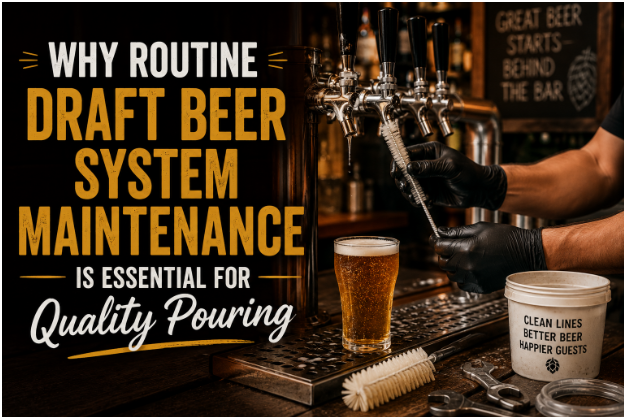
How Draft Beer Systems Help Bars Improve Profit Margins


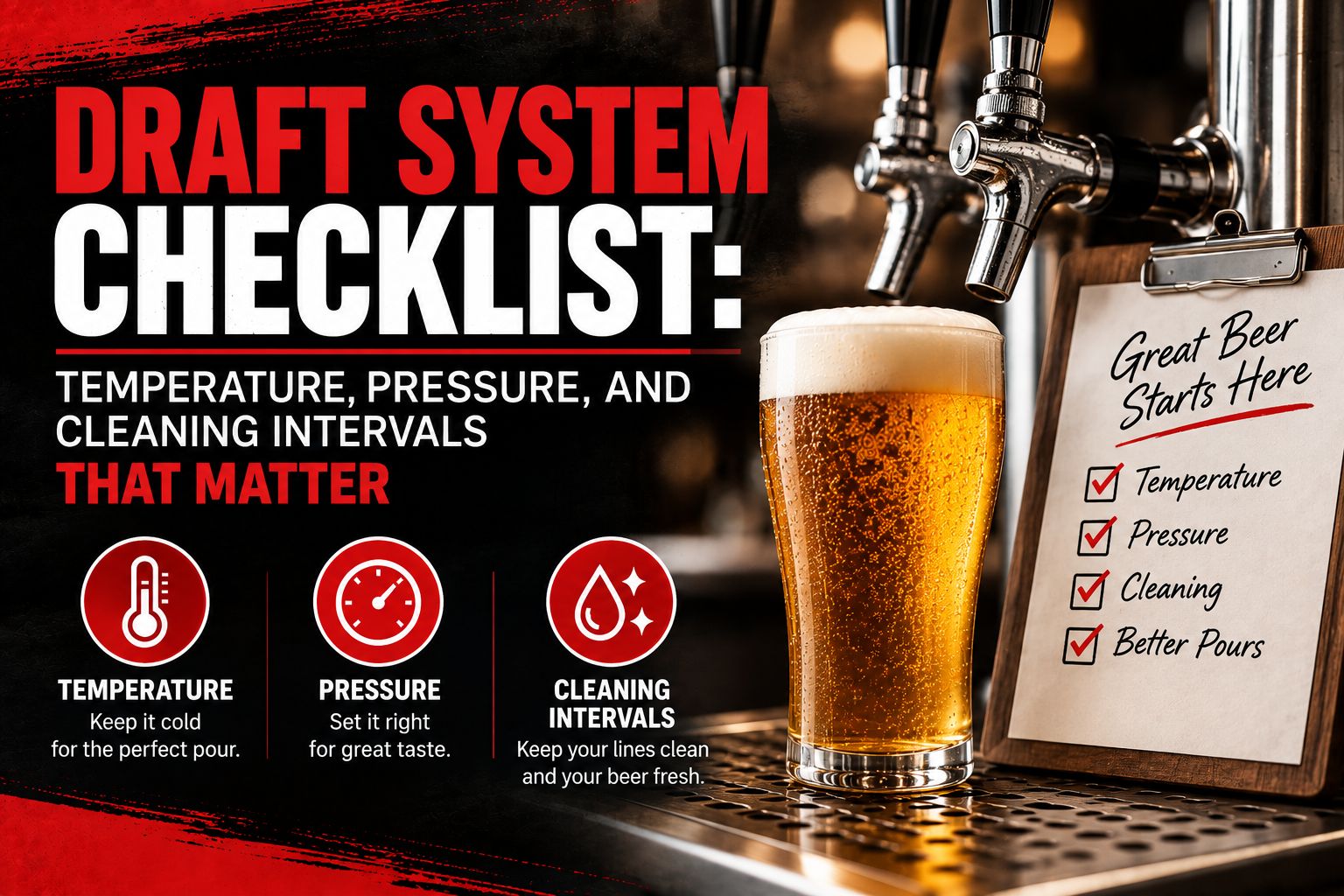
A draft system only works as well as its weakest link. When temperature, pressure, and cleaning are all in balance, beer pours clean, consistent, and true to the brewery's intent. When one of these areas slips, the result is foam, flat pours, or off-flavors that cost money and frustrate customers.


This checklist gives bars and restaurants a clear way to monitor the three pillars of draft quality: temperature, pressure, and cleaning intervals. Use it as a daily and weekly guide for your team, and as a reference before calling in professional service.


Temperature: the foundation of draft quality

Temperature affects carbonation, foam, and flavor. Beer that is too warm will foam excessively and lose carbonation. Beer that is too cold can taste muted and may pour slowly. Keeping the entire system at the right temperature is the first step to a good pour.


Daily temperature checks:

  • Verify keg temperature in the cooler, not just the air temperature.
  • Check that glycol or remote cooling systems are running and stable.
  • Ensure lines running through warm areas are properly insulated.
  • Confirm the faucet area is not exposed to direct heat or sunlight.
  • Record temperatures in a log to spot trends over time.


Target serving temperature for most draft beer is 36 to 38 degrees Fahrenheit. If your system runs outside this range, adjust cooling before changing other settings.


Pressure: balancing carbonation and flow

CO2 pressure must match your system design and beer style. Too much pressure creates foam and waste. Too little pressure causes flat pours and slow flow. Pressure issues are often mistaken for cleaning problems, so it is important to check them early.


Daily pressure checks:

  • Confirm the CO2 tank is open and has sufficient gas.
  • Verify regulator settings match the system's balance specifications.
  • Inspect for obvious leaks at the tank, regulator, and coupler.
  • Listen for hissing or bubbling that may indicate a leak.
  • Note any changes in pour behavior after pressure adjustments.


Weekly pressure checks:

  • Test each tap for consistent flow and foam levels.
  • Compare pressure settings across different beer styles and keg sizes.
  • Review recent changes in carbonation or foam that may signal imbalance.
  • Document any adjustments and their impact on pour quality.


If pressure must be set unusually high or low to get a decent pour, the system may be unbalanced or have hidden restrictions.


Cleaning intervals: protecting flavor and safety

Dirty lines are the most common cause of off-flavors in draft beer. Yeast, protein, and mineral buildup can make beer taste sour, stale, or chemical-like. Regular cleaning prevents this buildup and protects both flavor and safety.


Minimum cleaning schedule:

  • Clean beer lines every 14 days at minimum, as recommended by industry standards.
  • Clean faucets and couplers on the same schedule.
  • Flush taps that have not been used for several days before serving.
  • Use the correct cleaning chemistry for your system and water conditions.
  • Keep a signed cleaning log on site for compliance and tracking.


Signs cleaning is overdue:

  • Beer tastes sour, stale, or off compared to bottle or can versions.
  • Increased foam or gushing that was not present before.
  • Visible buildup in faucets or couplers during inspection.
  • Customer complaints about taste or carbonation.
  • Inconsistent pour quality from one tap to another.


If off-flavors persist after cleaning, the system may need a deep clean, acid wash, or professional inspection for biofilm.


Weekly draft quality checklist

Use this weekly checklist to keep your system on track:


Temperature:

  • Keg cooler temperature recorded and within target range.
  • Glycol or remote cooling system running without alarms.
  • No warm spots in line runs or faucet areas.


Pressure:

  • CO2 tank open and regulator set to correct pressure.
  • No audible leaks at tank, regulator, or coupler.
  • All taps pouring with consistent flow and foam levels.


Cleaning:

  • Last cleaning date recorded and within 14-day window.
  • Faucets and couplers visually clean and free of buildup.
  • Cleaning log signed and up to date.


Pour quality:

  • No flat pours or excessive foam on any tap.
  • Beer tastes clean and matches expected profile.
  • Staff trained on proper pour technique and glassware.

When to call a professional

Some issues require specialized knowledge or equipment. Call a professional draft service if:


  • Off-flavors persist after thorough cleaning and flushing.
  • Foam or flat pours continue despite correct temperature and pressure.
  • You suspect system imbalance, long-draw glycol issues, or hidden restrictions.
  • There are visible leaks you cannot locate or fix.
  • The system has not been serviced in a long time.


Professional service can rebalance the system, perform deep cleaning, and inspect components that are hard to access.


A well-maintained draft system is built on three pillars: correct temperature, balanced pressure, and consistent cleaning. By using a simple checklist, bars and restaurants can catch problems early, reduce waste, and keep every pour at its best. When these basics are in place, the entire operation runs smoother and customers get the quality they expect.


At Brewskis, we help venues maintain draft quality through professional cleaning, system balancing, and preventive maintenance. Our team ensures your temperature, pressure, and cleaning intervals are aligned so every pint pours the way it should.

GIVE US A CALL TODAY
Brewskis Beverage Service

AUTHOR:

Brewskis Beverage Service

Brewskis Beverage is a draft beer service company that specializes in draft system repair, installation, and custom beer tower design.

LEAVE A COMMENT:

Need Help with Draft Beer System Repair & Installation?

If you're in need of a draft beer system, be sure to check out Brewskis Beverage. We offer a wide selection of direct-draw beer systems that are perfect for any business. We also offer repair and installation services, so you can be sure your system is always up and running. Contact us today to learn more!

Blog - Request a Quote

Search Post:

RECENT POST:
October 8, 2026
Expanding a draft beer menu can attract new customers, encourage repeat visits, and give your bar or restaurant more opportunities to promote seasonal and specialty selections. However, adding more taps is not as simple as placing additional handles on the bar. A larger beer menu requires thoughtful planning, sufficient cooling, proper line routing, and a maintenance strategy that keeps every selection tasting fresh. The goal is to create variety without making the draft system difficult to operate. With the right approach, you can expand your menu while protecting beer quality, staff efficiency, and profitability. Start with your customer demand Before adding new taps, review what your customers are already ordering. Sales reports, customer feedback, and staff observations can help you determine which styles are most popular and which selections may deserve more attention. Consider whether your customers are asking for more lagers, IPAs, stouts, sour beers, local products, seasonal releases, or non-alcoholic options. Understanding demand helps you avoid filling valuable tap space with beers that do not move consistently. A successful draft menu should reflect your audience while still providing enough variety to make the selection interesting. Consider keg turnover Every keg needs to move at an appropriate pace. If a beer sits too long, its quality may decline and the business may lose product through spoilage or waste. This is especially important when adding specialty, seasonal, or lower-demand beers. Before adding a tap, consider how many servings you expect to sell, how long the keg will remain connected, whether the beer has special storage requirements, and whether it fits your current menu rotation. A smaller, carefully managed selection is often more profitable than a large menu with slow-moving products. Evaluate your existing system Your current draft system may not be ready for additional lines. Before expanding, evaluate the condition, capacity, and layout of the equipment already in place. Important considerations include the size of the cooler, available space for additional kegs, cooling capacity, line routing, gas distribution, tower configuration, and access for cleaning and service. Adding taps without evaluating these areas can lead to inconsistent pours, temperature problems, and increased maintenance needs. A professional assessment can help determine whether your system can support expansion or whether upgrades are needed first. Plan for proper cooling Cooling becomes more important as the number of draft lines increases. Beer must remain at a consistent serving temperature from the keg to the faucet. Long line runs, warm areas, and insufficient refrigeration can result in excessive foam, flat beer, and inconsistent flavor. Depending on your layout, expansion may require additional insulation, upgraded refrigeration, or a glycol cooling system. The right solution depends on the distance between the keg storage area and the bar, the number of lines, and the volume of beer being served. Proper cooling protects beer quality and makes the expanded system more reliable. Design an organized tap layout A larger menu should still be easy for staff and customers to understand. An organized tap layout can make service faster and reduce confusion during busy periods. Consider grouping beers by style, brewery, sales volume, or customer familiarity. Popular selections should be easy for staff to reach, while seasonal or specialty taps can be highlighted for customer interest. Clear labels and well-positioned tap handles also help customers make decisions more quickly. A well-organized tower can improve both the appearance and functionality of your bar. Maintain consistent line care More beer lines mean more cleaning and service responsibilities. Each additional line must be included in the regular maintenance schedule. If one line is neglected, it can affect the flavor and reputation of the entire draft program. A maintenance plan should account for line cleaning, faucet and coupler care, inspection of fittings and connections, temperature checks, pressure checks, and replacement of worn components. Keeping accurate service records can help staff know when each line was last cleaned and when follow-up is needed. Expansion should never come at the expense of draft quality. Train staff before launching new taps A larger beer menu requires staff knowledge. Bartenders should understand the basics of each beer, including its style, flavor profile, serving requirements, and recommended pairings. They should also know how to identify problems such as excessive foam, slow pours, or unusual taste. Training can help staff: Explain new selections to customers. Recommend beers with confidence. Pour each beer correctly. Identify system issues early. Reduce unnecessary waste. When staff are prepared, customers are more likely to try unfamiliar selections and return for their favorites. Protect profitability Adding taps can increase revenue, but only if the additional selections are managed carefully. Consider the cost of equipment upgrades, installation, cooling, maintenance, keg storage, product loss, and staff training. A profitable expansion should include a plan for pricing, portion control, inventory tracking, seasonal rotation, and measuring sales by tap. Reviewing this information after launch can help you identify which beers are worth keeping and which should be replaced. A draft expansion should support your business goals, not simply increase the number of handles on the bar. Plan for future flexibility Customer tastes change, and your beer menu may need to change with them. When expanding, consider whether the system can support future additions or seasonal rotations without requiring major reconstruction. Flexible planning may include extra capacity for future lines, accessible equipment placement, adaptable tower design, and a layout that allows new beers to be introduced efficiently. This can reduce costs if your draft program continues to grow. Planning ahead creates more options and helps protect the value of your investment. Know when to call a professional If you are unsure whether your current system can support expansion, professional guidance can prevent costly mistakes. An experienced draft service provider can evaluate your setup, recommend appropriate upgrades, plan line routing, assess cooling needs, and install additional taps properly. Professional assistance is especially important when adding long-draw lines, expanding a glycol system, redesigning a beer tower, or changing the layout of your keg storage and bar. The right support can help ensure that every new line performs consistently from the first pour. Expanding your draft beer menu can be a smart way to attract customers and increase beverage sales, but it requires more than adding taps. Demand, keg turnover, cooling, line routing, maintenance, staff training, and profitability all need to be considered. At Brewskis, we help bars and restaurants expand their draft programs with professional planning, custom beer tower design, installation, maintenance, and repair. With the right system and a thoughtful approach, you can offer more variety without sacrificing quality or operational efficiency.
October 8, 2026
A beer tower is more than a place to attach taps. It is a visible part of your bar, an important piece of your draft system, and a central part of the customer experience. The right beer tower can improve workflow, support consistent pours, create a stronger visual presentation, and help your business serve a wider selection of beer. For bars and restaurants, choosing the right tower requires more than selecting a design that looks attractive. The tower must also fit the space, support the number of taps you need, work with the draft system, and make service easy for your staff. Careful planning and professional installation can help ensure that your beer tower performs as well as it looks. Start with your business needs The best beer tower design begins with an understanding of your business. Every venue has different space limitations, customer volume, menu goals, and service requirements. A neighborhood bar may need a compact tower with a few popular selections, while a high-volume restaurant may need a larger system with multiple beer styles and rotating taps. Consider how many beers you want to serve, how much draft volume you expect, which selections will be permanent, and whether you plan to add seasonal or specialty options. These decisions will influence the size, layout, cooling needs, and line configuration of the tower. Planning around your actual service needs helps prevent an expensive setup that is either too small for your operation or more complex than necessary. Choose the right number of taps The number of taps is one of the most important decisions in beer tower design. More taps can create variety and attract customers, but additional lines also require more space, maintenance, cooling capacity, and inventory management. A well-planned tap system should provide enough variety without making operations unnecessarily complicated. Many businesses benefit from offering a balanced selection that includes familiar favorites, popular craft styles, seasonal choices, and premium options. The ideal number of taps depends on your menu, available space, sales volume, and ability to manage each keg properly. It is also important to plan for future growth. If you expect to expand your beer menu, your tower and draft infrastructure should be designed with that possibility in mind. Match the tower to your bar layout A beer tower must work with the physical layout of the bar. Its location affects staff movement, customer visibility, keg access, line routing, and overall service speed. A tower that looks good but blocks workflow can create problems during busy periods. Before installation, consider the distance between the tower and keg storage, the available space behind the bar, access for maintenance, placement of refrigeration or glycol equipment, and how staff will move around the work area. The tower should be easy for bartenders to use without creating unnecessary congestion. Proper planning also helps ensure that the system is accessible for cleaning, repairs, and future upgrades. Think about appearance and branding A custom beer tower can become a strong visual feature in your establishment. Customers often notice the tap wall or beer tower before they place an order, which makes design an important part of the overall atmosphere. Your tower can complement the style of your business through its shape, finish, materials, tap handles, lighting, and branding. A polished stainless steel tower may suit a modern restaurant, while a custom-branded tower may work better in a sports bar, brewery, or entertainment venue. The best design balances appearance with function. A visually impressive tower should still be easy to operate, clean, and maintain. Consider tap placement Tap placement affects speed, organization, and staff comfort. If taps are too close together, handles may interfere with one another. If they are placed too far apart, the tower may become unnecessarily large or difficult to use. Tap layout should account for beer type, sales volume, handle visibility, glass placement, and the way bartenders naturally move during service. Popular beers should be positioned where staff can reach them easily, while specialty or seasonal taps can be arranged to create visual interest. A thoughtful layout can improve service speed and reduce confusion during busy shifts. Plan for temperature control Temperature control is essential to draft beer quality. Beer lines must remain cold from the keg to the faucet, especially in systems where the keg storage area is separated from the bar. Depending on the layout and distance, the system may require insulated trunk lines or glycol cooling to maintain consistent serving conditions. A professional design should evaluate the distance between the keg cooler and the tower, the type of cooling required, the route of the beer lines, and the environment around the bar. Warm sections of line can lead to foam, inconsistent pours, and product waste. A properly cooled system protects beer quality and helps the tower perform consistently throughout service. Build around long-term maintenance A beer tower should be designed with maintenance in mind from the beginning. Every line, faucet, coupler, and connection needs to remain accessible for cleaning, inspection, and service. A system that is difficult to access can make routine maintenance more time-consuming and increase the risk of neglected components. Before finalizing the design, consider how technicians will access the lines, faucets, cooling equipment, and connections. Good planning makes cleaning easier, reduces downtime, and helps protect the long-term performance of the system. Professional installation also ensures that components are connected correctly and that the system is tested before it is placed into regular service. Avoid common design mistakes Several mistakes can reduce the effectiveness of a beer tower. Choosing too many taps without considering keg turnover can result in stale product and unnecessary complexity. Ignoring the distance between the keg cooler and tower can create cooling problems. Failing to plan for access can make routine service difficult. Other common issues include poor line routing, insufficient space behind the bar, incorrect equipment placement, and selecting a design based only on appearance. A successful beer tower must support the entire draft system, not just the front-facing presentation. Working with experienced professionals can help identify these concerns before installation begins. A tower should support your business goals The right beer tower can support more than beverage service. It can help your business highlight premium selections, create a recognizable bar feature, improve customer engagement, and make it easier for staff to serve guests efficiently. A well-designed system can also support future menu changes. As customer preferences shift, you may want to add seasonal releases, local beers, limited offerings, or specialty beverages. Planning for flexibility can make those changes easier and more cost-effective. Your tower should support where your business is today while allowing room for where it may go next. The value of professional design and installation Designing and installing a beer tower requires an understanding of draft systems, cooling, line routing, pressure, space planning, and service requirements. Professional support can help you choose equipment that fits your venue and avoid problems that may become expensive later. A professional draft service provider can help with system planning, custom tower design, tap layout, line installation, cooling requirements, equipment connections, testing, and long-term maintenance planning. This creates a more reliable foundation for consistent service. At Brewskis, we help bars and restaurants design and install draft beer systems that match their space, menu, and operational goals. Our team can help turn your vision into a functional and attractive setup. The perfect beer tower combines design, performance, and practicality. It should look right for your business, support the number of taps you need, fit your bar layout, maintain proper cooling, and remain accessible for maintenance. When these details are planned carefully, the result is a better experience for staff and customers.  At Brewskis, we provide professional draft beer system services, including custom beer tower design, installation, repair, and maintenance. A well-designed tower can become one of the most useful and recognizable features of your bar or restaurant.
September 5, 2026
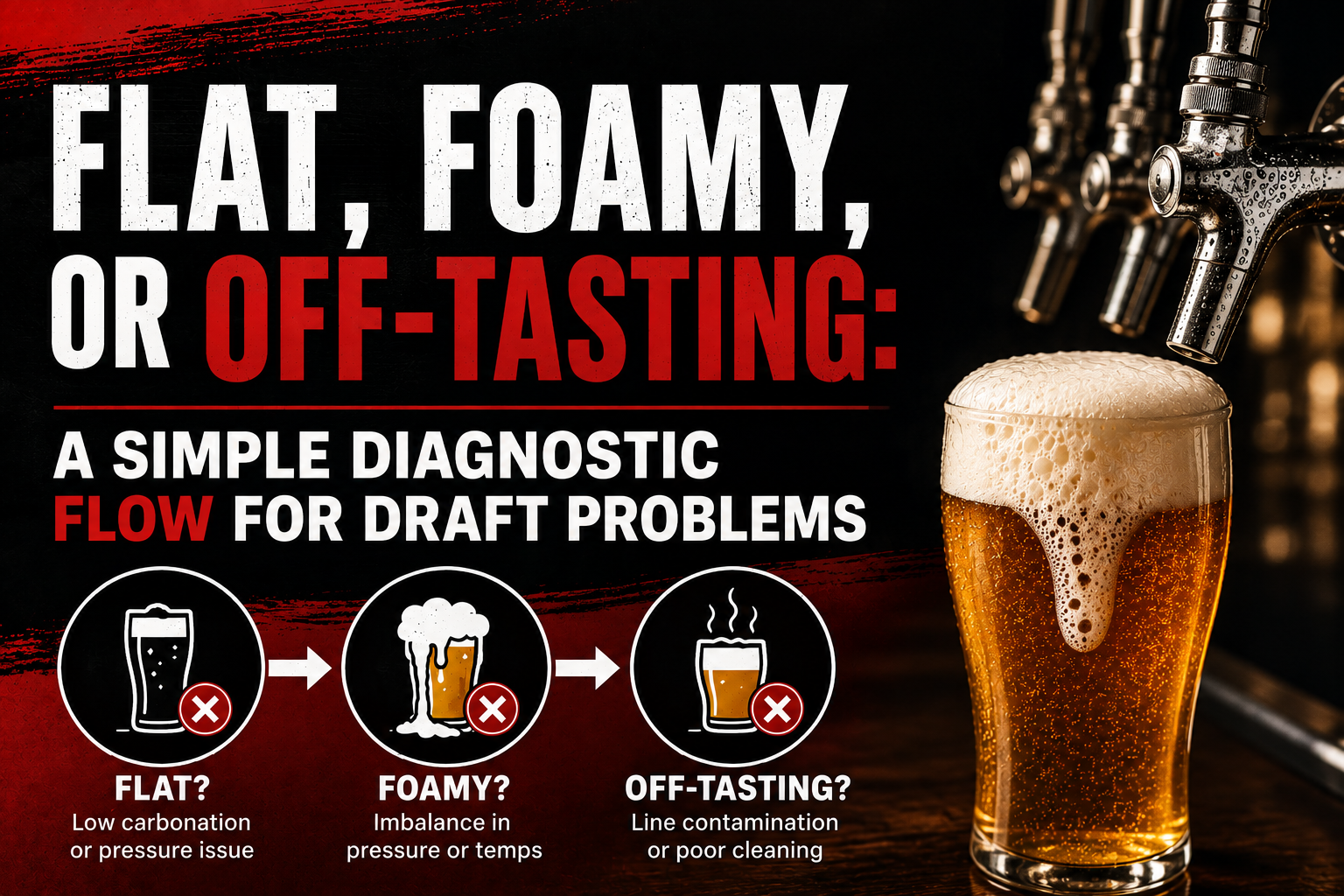
When a draft pour is not right, the problem is usually one of three things: the beer pours flat, it pours too foamy, or it tastes off. Each symptom points to a specific set of causes. By following a simple diagnostic flow, bars and restaurants can find the root issue faster, reduce waste, and get back to clean, consistent pours. This guide walks you through a step-by-step way to troubleshoot common draft problems. Use it as a checklist for your team or as a starting point before calling in professional service. Start with the basics Before diving into complex fixes, check the fundamentals. Many draft issues come from simple oversights that are easy to correct. Quick basics to verify: Is the keg cold enough from top to bottom? Is the CO2 tank open and connected properly? Is the regulator set to the correct pressure for the beer and system? Are the faucet and coupler clean and free of debris? Has the system been cleaned within the recommended interval? If any of these are off, correct them first and test a pour. If the beer pours flat Flat beer usually means the beer is losing carbonation somewhere between the keg and the glass. This can happen due to low pressure, temperature issues, or leaks. Check these in order: CO2 pressure: Verify the regulator is set correctly for your system and beer style. Too low pressure can cause flat pours. Temperature: Warm beer holds less carbonation. Ensure the keg and lines are at the proper serving temperature. Leaks: Inspect all connections, including the coupler, regulator, and line fittings. Use soapy water to look for bubbles that indicate a leak. Line length and balance: If lines are too long or the system is unbalanced, carbonation can drop before the beer reaches the faucet. Keg age: Old or improperly stored kegs can lose carbonation over time. If pressure, temperature, and connections are correct but the beer is still flat, the system may need rebalancing or professional inspection. If the beer pours too foamy Excessive foam is one of the most common draft complaints. It is often caused by temperature, pressure, or restriction issues that agitate the beer as it flows. Check these in order: Temperature: Beer that is too warm will foam excessively. Ensure the keg and lines are properly chilled. Pressure: Too much CO2 pressure can cause over-carbonation and foam. Verify the regulator setting matches your system design. Restrictions: Kinks in the line, clogged faucets, or dirty couplers can create turbulence and foam. Inspect and clean as needed. System balance: If line length, diameter, and pressure are not balanced, foam is likely. This often requires a professional assessment. Pour technique: Tilting the glass and opening the faucet fully can reduce foam. Train staff on proper pour method. If foam persists after these checks, the issue may be deeper in the system, such as glycol problems in long-draw setups or hidden restrictions. If the beer tastes off Off-flavors are often the most serious sign. They can indicate contamination, dirty lines, or equipment issues that affect both taste and safety. Check these in order: Line cleanliness: Dirty beer lines are the most common cause of sour, stale, or off-tasting beer. Verify the last cleaning date and schedule a clean if overdue. Faucet and coupler hygiene: Buildup in these areas can taint flavor. Remove and clean both components thoroughly. Old beer in lines: If a tap has not been used in a while, flush it before serving. Stale beer left in lines can spoil the taste. Chemical residue: If lines were recently cleaned, ensure they were rinsed properly. Residual cleaner can create chemical or soapy flavors. Equipment wear: Worn seals, gaskets, or plastic parts can harbor bacteria and affect taste. Replace parts as needed. If off-flavors continue after cleaning and flushing, the system may need a deep clean, acid wash, or professional service to check for biofilm or hidden contamination. Use a simple diagnostic flow To make troubleshooting faster, follow this order: Check temperature first. Most draft problems start with improper cooling. Verify CO2 pressure and connections. Incorrect pressure or leaks cause flat or foamy pours. Inspect faucets, couplers, and lines for dirt, debris, or damage. Confirm the system was cleaned on schedule and rinsed properly. Test pour technique and glassware. Staff training can solve many foam issues. If problems persist, call a professional to assess system balance, glycol function, or hidden issues. This flow helps you eliminate the most common causes before moving to complex fixes. When to call a professional Some draft problems require specialized knowledge or equipment. If basic checks do not resolve the issue, it is time to bring in expert service. Call a professional if: Off-flavors persist after thorough cleaning and flushing. Foam or flat pours continue despite correct temperature and pressure. You suspect system imbalance or glycol issues in long-draw setups. There are visible leaks you cannot locate or fix. The system has not been serviced in a long time. Professional service can identify hidden problems, rebalance the system, and perform deep cleaning that restores pour quality. Prevent problems with routine care The best way to avoid draft issues is consistent maintenance. A well-maintained system pours better, wastes less beer, and keeps customers happy. Routine care should include: Cleaning beer lines every 14 days at minimum. Cleaning faucets and couplers on the same schedule. Checking temperature and pressure regularly. Inspecting lines and fittings for wear or damage. Keeping a log of cleaning and service dates. When maintenance is routine, small issues are caught before they become big problems. Flat, foamy, or off-tasting beer does not have to mean lost revenue or unhappy customers. By following a simple diagnostic flow, you can identify and fix most draft problems quickly. Start with temperature and pressure, move to cleaning and inspection, and call in professional service when needed. Consistent care and a clear troubleshooting process keep your draft system pouring at its best. At Brewskis, we help bars and restaurants diagnose and resolve draft issues fast. From cleaning and balancing to full system service, our team ensures every pour meets quality standards.
August 28, 2026
A great draft pour should taste clean, fresh, and true to the brewery’s intent. When beer tastes sour, stale, flat, or oddly foamy, it is rarely the beer’s fault. Most of the time, the problem lives in the draft system itself. For bars, restaurants, and venues that serve draft beer, off-flavors and poor pours are more than a minor annoyance. They damage customer trust, increase waste, and can quietly hurt your reputation. The good news is that most draft quality issues are preventable with the right maintenance and professional support. Common causes of off-tasting draft beer Draft beer is sensitive. It travels through lines, faucets, couplers, and regulators before it reaches the glass. If any part of that system is dirty, unbalanced, or poorly maintained, the beer can pick up unwanted flavors or lose carbonation. Some of the most common causes include: Dirty beer lines: Residue, yeast, and protein buildup can create sour, stale, or “off” flavors. Old or contaminated faucets and couplers: Buildup in these areas can affect taste and flow. Improper temperature: Beer that is too warm can foam excessively and taste flat; beer that is too cold can mute flavor. Incorrect gas pressure: Too much pressure creates foam; too little pressure makes beer pour slowly and lose carbonation. Unbalanced system: Line length, diameter, and pressure must work together. If they do not, pours suffer. Leaks or worn parts: Small leaks or worn components can cause oxidation, flat beer, or inconsistent pours. When these issues stack up, the beer in the glass no longer matches what the brewery intended. What off-flavors usually mean Different taste problems often point to different system issues. Sour or stale taste: Often caused by dirty lines, old beer residue, or contaminated faucets. Flat or under-carbonated beer: Can result from low gas pressure, leaks, or temperature issues. Over-foaming pours: Usually tied to high pressure, warm lines, or imbalance in the system. Metallic or chemical taste: May indicate equipment issues or improper cleaning. Inconsistent pours from tap to tap: Often a sign of uneven pressure, line problems, or maintenance gaps. Identifying the pattern helps narrow down the root cause. Why cleaning matters Beer line cleaning is one of the most important steps in maintaining draft quality. The Brewers Association and industry best practices recommend cleaning draught systems at least every 14 days, with additional attention to faucets and couplers. Cleaning helps remove: Yeast and protein buildup. Mineral deposits. Mold or bacteria. Old beer residue. When lines are clean, beer flows through without picking up unwanted flavors. That means the pour tastes fresher, cleaner, and more consistent. Temperature and pressure: the quiet quality killers Even with clean lines, draft beer can taste wrong if temperature or pressure is off. Temperature: Beer should be kept at the correct temperature from keg to faucet. Warm lines cause foaming; overly cold beer can taste muted. Pressure: Gas pressure must match the system design. Too high creates foam; too low causes flat, slow pours. Balance: Line length, diameter, and pressure must work together. An unbalanced system will struggle no matter how clean the lines are. These factors are technical, but they directly affect what the customer experiences. How professional service fixes the problem Draft systems may look simple, but they require technical knowledge to maintain correctly. Professional service helps identify and resolve issues that routine cleaning alone may not fix. A professional draft service visit may include: Full line cleaning and sanitation. Faucet and coupler inspection and cleaning. Pressure and temperature verification. System balancing checks. Leak detection and hardware inspection. Recommendations for ongoing maintenance schedules. This kind of service prevents small issues from becoming costly problems. It also protects the quality of every pour. The cost of ignoring draft quality Poor draft quality does more than ruin a single beer. It affects the entire customer experience. Potential costs include: Wasted product from foaming and bad pours. Lost repeat business from dissatisfied customers. Increased service calls and emergency repairs. Damage to brand reputation. Preventive maintenance is almost always less expensive than fixing a neglected system. Signs your draft system needs attention If you notice any of the following, it may be time to call a professional: Beer tastes sour, stale, or “off.” Pours are consistently foamy or flat. Some taps pour differently than others. You see visible buildup in faucets or lines. Customers complain about beer quality. You are unsure when the system was last serviced. Early action can prevent bigger problems down the line. Why consistency matters Customers expect their draft beer to taste right every time. Consistency builds trust. When a guest knows they can count on a quality pour, they are more likely to return. Professional maintenance helps ensure: Better flavor. Better presentation. Better customer experiences. Better overall consistency. That consistency supports your brand and keeps guests coming back. Closing thought If your draft beer tastes off, the problem is usually fixable. Most issues come from dirty lines, unbalanced systems, or temperature and pressure problems, all of which professional service can address. For businesses that care about quality, regular maintenance is not optional. It is essential. At Brewskis , we know that a great draft experience starts with a well-maintained system. Keeping your equipment clean, balanced, and properly serviced helps every pour deliver the quality your customers expect.
August 21, 2026
A great draft pour should taste clean, fresh, and true to the brewery’s intent. When beer tastes sour, stale, flat, or oddly foamy, it is rarely the beer’s fault. Most of the time, the problem lives in the draft system itself. For bars, restaurants, and venues that serve draft beer, off-flavors and poor pours are more than a minor annoyance. They damage customer trust, increase waste, and can quietly hurt your reputation. The good news is that most draft quality issues are preventable with the right maintenance and professional support. Common causes of off-tasting draft beer Draft beer is sensitive. It travels through lines, faucets, couplers, and regulators before it reaches the glass. If any part of that system is dirty, unbalanced, or poorly maintained, the beer can pick up unwanted flavors or lose carbonation. Some of the most common causes include: Dirty beer lines: Residue, yeast, and protein buildup can create sour, stale, or “off” flavors. Old or contaminated faucets and couplers: Buildup in these areas can affect taste and flow. Improper temperature: Beer that is too warm can foam excessively and taste flat; beer that is too cold can mute flavor. Incorrect gas pressure: Too much pressure creates foam; too little pressure makes beer pour slowly and lose carbonation. Unbalanced system: Line length, diameter, and pressure must work together. If they do not, pours suffer. Leaks or worn parts: Small leaks or worn components can cause oxidation, flat beer, or inconsistent pours. When these issues stack up, the beer in the glass no longer matches what the brewery intended. What off-flavors usually mean Different taste problems often point to different system issues. Sour or stale taste: Often caused by dirty lines, old beer residue, or contaminated faucets. Flat or under-carbonated beer: Can result from low gas pressure, leaks, or temperature issues. Over-foaming pours: Usually tied to high pressure, warm lines, or imbalance in the system. Metallic or chemical taste: May indicate equipment issues or improper cleaning. Inconsistent pours from tap to tap: Often a sign of uneven pressure, line problems, or maintenance gaps. Identifying the pattern helps narrow down the root cause. Why cleaning matters Beer line cleaning is one of the most important steps in maintaining draft quality. The Brewers Association and industry best practices recommend cleaning draught systems at least every 14 days, with additional attention to faucets and couplers. Cleaning helps remove: Yeast and protein buildup. Mineral deposits. Mold or bacteria. Old beer residue. When lines are clean, beer flows through without picking up unwanted flavors. That means the pour tastes fresher, cleaner, and more consistent. Temperature and pressure: the quiet quality killers Even with clean lines, draft beer can taste wrong if temperature or pressure is off. Temperature: Beer should be kept at the correct temperature from keg to faucet. Warm lines cause foaming; overly cold beer can taste muted. Pressure: Gas pressure must match the system design. Too high creates foam; too low causes flat, slow pours. Balance: Line length, diameter, and pressure must work together. An unbalanced system will struggle no matter how clean the lines are. These factors are technical, but they directly affect what the customer experiences. How professional service fixes the problem Draft systems may look simple, but they require technical knowledge to maintain correctly. Professional service helps identify and resolve issues that routine cleaning alone may not fix. A professional draft service visit may include: Full line cleaning and sanitation. Faucet and coupler inspection and cleaning. Pressure and temperature verification. System balancing checks. Leak detection and hardware inspection. Recommendations for ongoing maintenance schedules. This kind of service prevents small issues from becoming costly problems. It also protects the quality of every pour. The cost of ignoring draft quality Poor draft quality does more than ruin a single beer. It affects the entire customer experience. Potential costs include: Wasted product from foaming and bad pours. Lost repeat business from dissatisfied customers. Increased service calls and emergency repairs. Damage to brand reputation. Preventive maintenance is almost always less expensive than fixing a neglected system. Signs your draft system needs attention If you notice any of the following, it may be time to call a professional: Beer tastes sour, stale, or “off.” Pours are consistently foamy or flat. Some taps pour differently than others. You see visible buildup in faucets or lines. Customers complain about beer quality. You are unsure when the system was last serviced. Early action can prevent bigger problems down the line. Why consistency matters Customers expect their draft beer to taste right every time. Consistency builds trust. When a guest knows they can count on a quality pour, they are more likely to return. Professional maintenance helps ensure: Better flavor. Better presentation. Better customer experiences. Better overall consistency. That consistency supports your brand and keeps guests coming back. Closing thought If your draft beer tastes off, the problem is usually fixable. Most issues come from dirty lines, unbalanced systems, or temperature and pressure problems, all of which professional service can address. For businesses that care about quality, regular maintenance is not optional. It is essential. At Brewskis , we know that a great draft experience starts with a well-maintained system. Keeping your equipment clean, balanced, and properly serviced helps every pour deliver the quality your customers expect.
August 14, 2026
A great draft pour does not happen by accident. Behind every clean, consistent, good-tasting beer is a draft system that has been properly maintained, cleaned, and balanced. When that system is neglected, the beer can lose freshness, the pour can become inconsistent, and the whole customer experience can suffer. For bars, restaurants, and other draft beer businesses, routine maintenance is not just a technical task. It is a direct part of product quality, customer satisfaction, and profitability. A well-maintained system helps every pour taste the way it should. Why maintenance matters Draft beer systems are complex. Beer lines, faucets, couplers, regulators, and cooler components all work together to move beer from keg to glass. If one part falls out of balance, the quality of the pour can drop quickly. Regular maintenance helps: Preserve beer freshness. Prevent contamination. Reduce foaming and waste. Keep pours consistent. Extend the life of equipment. When draft systems are ignored, small issues can turn into bigger problems fast. What starts as a slightly off-tasting pint or a foamy pour can become lost product, unhappy customers, and expensive repairs. What happens when maintenance is skipped Dirty or poorly maintained draft systems can cause a range of problems. Beer lines may collect residue, faucets may clog, and buildup can affect both flavor and flow. Customers may notice off flavors, weak carbonation, or a pour that looks wrong before they can even take a sip. Common problems include: Sour or stale taste. Excessive foam. Flat beer. Slow or uneven pours. Inconsistent pressure. Equipment wear and breakdowns. These problems do more than hurt the beer. They hurt the business. A poor draft pour can make a guest question the quality of the entire establishment. Clean lines make better beer One of the biggest reasons to schedule routine maintenance is simple: clean lines make better beer. Beer line buildup can affect flavor and create the kind of stale, unpleasant taste that no brewery intended. Cleaning helps remove: Yeast and protein residue. Mineral buildup. Mold or bacteria. Old beer deposits. When lines are clean, the beer travels through the system without picking up unwanted flavors. That means the beer in the glass tastes fresher, cleaner, and more consistent. Better pours save money Routine maintenance is also a business decision. A draft system that is not working properly can waste a lot of beer through foaming, leaking, or bad pours. That lost product adds up quickly. A well-maintained system can help: Reduce waste. Improve yield from each keg. Prevent unnecessary service calls. Lower repair costs over time. Protect profit margins. Even small improvements in efficiency can make a real difference, especially in high-volume environments. Maintenance may feel like an expense, but it often saves money in the long run. Consistency keeps customers happy When customers order a draft beer, they expect it to look and taste right every time. Consistency matters. If one pour is perfect and the next is flat or foamy, guests notice. Routine maintenance helps keep: Carbonation levels stable. Temperature controlled. Pressure properly balanced. Beer flowing at the right speed. That consistency builds trust. Guests are more likely to come back when they know they can count on a quality pour every time. What regular maintenance includes Routine draft beer maintenance can involve several steps depending on the system and setting. In general, it should include cleaning, inspection, and adjustment as needed. A maintenance visit may include: Cleaning beer lines. Checking faucets and couplers. Inspecting tubing and connections. Reviewing gas pressure and balance. Testing for leaks or wear. Evaluating temperature and system performance. These steps help catch problems before they become major issues. Preventive care is almost always easier and less costly than emergency repair. How often should maintenance happen? The right schedule depends on system use, beer type, and equipment setup, but regular service should always be part of the plan. High-volume systems may need more frequent attention, while lower-volume systems still need consistent cleaning and inspection. The important thing is not to wait until something goes wrong. A proactive schedule helps keep the system working properly and protects beer quality every day. Businesses that treat maintenance as routine tend to avoid more serious issues later on. Why professional service matters Draft beer systems may look simple from the outside, but they require technical knowledge to maintain correctly. Pressure, temperature, line length, and cleaning methods all affect how the beer pours. Professional maintenance helps ensure: Proper cleaning techniques. Correct system balancing. Early identification of problems. Safer, more reliable equipment performance. For businesses that depend on draft beer, professional service provides peace of mind. It helps protect both the product and the customer experience. A clean system supports your brand Every pour says something about your business. A beer that tastes fresh and pours smoothly sends the message that you care about quality. A poor pour sends the opposite message. Routine maintenance supports your brand by helping you deliver: Better flavor. Better presentation. Better customer experiences. Better overall consistency. When guests remember the quality of the beer, they are more likely to remember the business positively too. Routine draft beer system maintenance is one of the simplest ways to protect beer quality, reduce waste, and keep customers happy. Clean lines, balanced equipment, and regular service all work together to create a better pour every time. For businesses that care about consistency and performance, maintenance is not optional, it is essential. At Brewskis, we know that a great draft system is the foundation of a great beer experience. Keeping it in top shape helps every pour live up to its potential.
August 7, 2026
A great draft beer experience starts long before the first pour. Proper tap installation plays a major role in how beer tastes, how it flows, and how consistently it reaches the glass. When a tap system is installed the right way, it helps preserve quality from keg to pour and creates a better experience for both businesses and customers. For bars, restaurants, and draft beer operations, tap installation is not just about convenience. It affects performance, efficiency, and the overall quality of the beer being served. A well-installed system supports everything that comes after it. Why installation matters Draft beer systems depend on balance. Pressure, temperature, line length, faucet placement, and equipment compatibility all affect the final result. If the installation is not done correctly, the system may struggle from the start. A proper tap installation helps: Maintain beer freshness. Deliver a smooth, consistent pour. Reduce foaming. Protect carbonation. Prevent leaks and equipment issues. When any part of the system is installed incorrectly, the quality of the beer can suffer. Even high-quality beer will not pour well if the tap setup is flawed. How installation affects beer quality Beer is sensitive to changes in temperature and pressure. That means the tap system has to be set up with precision. If the lines are too short, too long, poorly insulated, or not balanced correctly, the beer can lose carbonation or pour with too much foam. Poor installation can lead to: Flat beer. Over-carbonation or under-carbonation issues. Excess foam. Off flavors. Uneven dispensing. A proper installation helps make sure the beer stays in the condition it was meant to be served in. That is essential for both taste and presentation. A good pour starts with the right setup When tap equipment is installed correctly, the system works more efficiently. The beer flows smoothly, the pressure stays stable, and the pour feels clean and controlled. That consistency matters because guests notice the difference right away. A good tap setup supports: Faster service. Better-looking pours. Less waste. More reliable performance. Easier day-to-day operation. For businesses, that means less frustration behind the bar and a better experience for customers at the table. Installation mistakes can be costly If a draft system is installed poorly, the problems may not show up right away. But over time, they can become expensive. Leaks, foaming, wasted product, and frequent service calls all add up. Common installation problems include: Incorrect pressure settings. Poor line routing. Inadequate temperature control. Loose fittings or connections. Incorrect faucet or shank placement. These issues can lead to ongoing maintenance headaches and reduced beer quality. That is why professional installation is so important from the beginning. Proper installation helps protect your investment Draft beer equipment is an investment, and installation is the foundation that protects it. When the system is installed correctly, the equipment is more likely to perform well and last longer. This can help: Extend the life of taps and lines. Reduce repair needs. Lower operating costs. Improve product efficiency. Protect your beer inventory. A good installation pays off over time by reducing avoidable problems. It gives the system a strong start and helps businesses get the most value from their equipment. The customer notices the difference Most customers may not think about the tap system itself, but they absolutely notice the result. A beer that pours cleanly, tastes fresh, and arrives looking right creates a better impression. That means proper installation affects more than equipment performance. It affects: Customer satisfaction. Repeat business. Brand reputation. Perceived quality. A smooth draft pour can become part of what people remember about your business. That makes installation an important part of the customer experience, not just the back-end setup. Why professional installation is worth it Draft beer systems may seem straightforward, but they require technical knowledge to install correctly. Professional installation helps ensure that the system is balanced, efficient, and tailored to the specific setup. Professional service can help with: System design and planning. Correct equipment placement. Pressure and temperature setup. Leak prevention. Long-term reliability. When the installation is done by experienced technicians, businesses can feel more confident that the system will perform the way it should from the beginning. Installation and maintenance go hand in hand Even the best tap installation still needs routine care. Installation creates the foundation, and maintenance keeps the system performing well over time. When both are handled properly, beer quality stays consistent and problems are easier to avoid. That is why many businesses think of installation and maintenance as part of the same long-term strategy. One supports the other, and together they help protect the quality of every pour. Proper tap installation matters because it shapes everything that comes after it. From freshness and carbonation to pour quality and customer satisfaction, the system has to be installed correctly to do its job well. For any business serving draft beer, that attention to detail is worth it. At Brewskis, we understand that the best beer experience starts with the right setup. A properly installed tap system helps every pour deliver the quality customers expect.
Follow Brewskis Beverage Service on Facebook!

FOLLOW US ON FACEBOOK!

We would love to hear from you. Follow us on facebook to stay up to date with our latest posts and deals!